Why Are Adirondack Chairs So Hard to Get Out Of?
Adirondack chairs feel uncomfortable when their low, tilted seats and reclined backs don't fit your body or activity. A deep seat can make standing harder, while a firm surface or poorly placed seat edge can create pressure.
On this page (9 sections)
- Why are Adirondack chairs so uncomfortable for some people?
- What makes an Adirondack chair hard to get out of?
- How can you tell whether an Adirondack chair fits?
- Which of these Adirondack chairs suits your needs?
- Can cushions and footrests make the chair more comfortable?
- How should you set up and care for an Adirondack chair?
- Which mistakes should you avoid before buying?
- FAQ
- Should you keep an uncomfortable Adirondack chair?
Adirondack chairs feel uncomfortable when their low, tilted seats and reclined backs don't fit your body or activity. If you're wondering why Adirondack chairs are so uncomfortable, start with seat fit before blaming the material.
A chair that works for leaning back beside the patio may feel awkward for eating, working, or getting up often. The useful question is which part bothers you: pressure, posture, or the effort of standing.
Why are Adirondack chairs so uncomfortable for some people?
The seat slope and back angle hold you in a lounging position, which can feel restrictive if you want to sit upright. A firm seat adds another problem when its curves or edges don't match your body.
A deep seat may leave a shorter person choosing between reaching the backrest and keeping both feet planted. A shallow seat can leave a taller person's thighs with less support.
The front edge matters too. If it presses behind your knees, you may shift forward and lose contact with the backrest.
Wide arms give you somewhere to rest your forearms, but they don't correct the seat geometry. Choose the shape for your body first, then compare storage and care features.
Why do Adirondack chairs feel so uncomfortable when eating or reading?
A reclined chair puts you farther from an upright task. You may keep lifting your head to read or leaning forward to reach a plate, leaving much of the backrest unused.
For meals, choose seating that matches your table height. For reading, check whether you can hold a book comfortably without rounding your shoulders or craning your neck.
What makes an Adirondack chair hard to get out of?
Sitting low with your weight behind your feet makes standing harder. You need room to bring your feet back and shift forward before rising.
A seat that slopes down toward the back can deepen that position. Overall chair height tells you how tall the back is, not how far your hips sit above the ground.
Armrests may help with positioning, but don't assume they can bear your full weight. Follow the chair's instructions and avoid pulling sideways on an arm to get up.
If low seats already cause trouble, prioritize a higher, more upright style. Our guide to choosing patio furniture for older adults explains the fit and access checks that matter.
How can you tell whether an Adirondack chair fits?
Check foot placement, thigh support, back contact, and the movement needed to stand. Measure a chair you already find comfortable so you have useful numbers to compare.
Use these checks before choosing:
- Seat height: Your feet should reach firm ground without the front edge pressing behind your knees.
- Usable depth: You should reach the backrest without sliding into an awkward position.
- Seat width: Allow room for your hips and clothing without forcing your arms outward.
- Back angle: Check whether it suits lounging or makes you work to stay upright.
- Exit space: Leave enough room to place your feet and lean forward.
If you can try a chair, sit long enough to notice pressure rather than judging it from a quick perch. Practice rising only within your usual ability, with help nearby if needed.
For an online order, ask about missing seat measurements and check return terms before assembly. None of the 3 chairs below has a confirmed seat height here, so don't choose one solely to solve difficult standing.
The Adirondack chair versus Muskoka chair comparison explains the naming overlap. For other seating shapes, see our porch and patio seating buying guide.
Which of these Adirondack chairs suits your needs?
Choose by the feature that solves your actual problem: folding storage, seat-edge shape, or a classic lounge profile. All 3 remain Adirondack loungers, so changing models may not help someone who needs upright seating.
GREENVINES: choose it for folding storage and paired seating
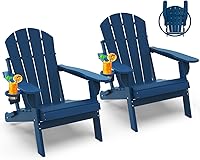
The GREENVINES set suits households that want 2 chairs they can fold away. Each chair has a hidden right-arm cup holder and a curved backrest.
Each chair measures 29.1 in wide, 33.5 in deep, and 35 in high overall, with a stated capacity of 350 lb. GREENVINES gives the individual chair weight as 36 lb, so folding doesn't make it a light carry.
The HDPE frames and slatted seats suit outdoor use where easy care and drainage matter. Partial assembly is required.
Skip this set if you need effortless carrying or a confirmed high seat. Before folding, clear the cup holder and follow the folding instructions, keeping fingers away from moving joints.
POLYWOOD Modern: choose it for a shaped seat front
The POLYWOOD Modern suits loungers who want a contoured seat with a waterfall front. That curved front is worth comparing if a straight seat edge bothers the backs of your thighs.
Its wide armrests and relaxed back angle support the intended lounging position. POLYWOOD describes its HDPE lumber as resistant to moisture, cracking, peeling, and chipping.
It uses marine-grade stainless steel hardware and cleans with mild soap and water. No painting, staining, or sealing is required.
Skip it if upright posture or folding storage is essential. The waterfall edge changes the contact shape, but it doesn't tell you whether the seat height and depth will fit you.
POLYWOOD Classic AD4030: choose it for traditional lounging
The POLYWOOD Classic suits buyers who want a traditional reclined profile with seat contours. Choose it when that posture already feels comfortable and simple care matters.
The frame is HDPE lumber, and assembly uses marine-grade quality hardware. Clean it with soap, water, and a soft-bristle brush.
POLYWOOD offers coordinating all-weather seat cushions for this model. A compatible cushion is useful for surface softness, but choose the chair's fit before choosing padding.
Skip it if you're trying to escape a deep lounging position. Its traditional shape doesn't offer a clear reason to expect easier standing than another low Adirondack.
For a wider choice of shapes, compare the best Adirondack chairs and the best plastic Adirondack chairs.
Can cushions and footrests make the chair more comfortable?
A cushion can soften contact, and a footrest can support your legs during lounging. Neither changes the chair's basic back angle or makes an unsuitable seat fit correctly.
Choose an outdoor cushion made for the chair's seat shape, with a way to keep it secure. Check that the added thickness doesn't leave the armrests too low or push you away from the back.
A small back cushion may fill a gap, but too much padding reduces usable seat depth. Stop adding padding if you begin perching at the front.
Move a footrest aside before standing so it doesn't block your feet. Don't stack loose cushions or place blocks under the legs to raise the chair.
How should you set up and care for an Adirondack chair?
Use firm, level ground, correct assembly, and clear access. These steps prevent avoidable wobble and obstacles, though they can't correct a poor fit.
Assemble the chair in the order given by the manufacturer, then check that all feet rest evenly. Tighten hardware as directed without forcing fasteners into the material.
Allow room beyond the chair's footprint for sitting down and standing up. Our guide to arranging furniture on a small patio helps you plan access around seating.
Wipe away grit, bird droppings, and spills, and clean according to the chair's care instructions. Let cushions dry fully before storage, and clear leaves from slat gaps.
HDPE still feels firm and can become hot in direct sun. Shade can make the sitting surface more pleasant; our HDPE versus wood Adirondack guide covers the broader material tradeoffs.
Which mistakes should you avoid before buying?
Don't use overall size, weight capacity, or soft padding as a substitute for seat fit. Those details answer different questions.
A high weight capacity doesn't tell you whether the seat is wide enough. A tall back doesn't mean a high sitting position, and folding doesn't mean a chair is easy to lift.
Avoid buying several chairs before checking whether the shape suits the people who will use them most. Also resist choosing a matching patio set if its seating makes daily use awkward.
FAQ
Comfort depends on fit, posture, and how you use the chair. These answers address the remaining questions about low outdoor seating.
Why are Adirondack chairs hard to get out of?
Their low, tilted seats can leave your hips below your knees and your weight behind your feet. Standing then requires more forward movement and effort.
A deep seat can also limit foot placement, so check the actual seat measurements and leave enough clear ground in front.
Are Adirondack chairs bad for your back?
Adirondack chairs aren't automatically bad for your back, but their reclined shape won't suit everyone. If you slide forward, round your back, or strain to sit upright, the fit may be wrong for you.
Change position during long sitting periods, and speak with a health professional about ongoing pain.
Can you make an Adirondack chair easier to get out of?
A secure, compatible cushion may raise your sitting position slightly, but it won't remove a deep seat slope. First check the chair's placement and clear space for your feet.
If rising still takes a struggle, choose a higher, more upright chair instead of stacking cushions or changing the legs.
Are all Adirondack chairs low to the ground?
No, seat heights vary, and some versions sit higher than others. Check the distance from the ground to the sitting surface, rather than using overall back height as a guide.
Also compare seat depth and slope, since a higher front edge can still lead to a low sitting position.
Should you keep an uncomfortable Adirondack chair?
Keep it only if a simple change solves the discomfort without making access harder. If you're still asking why Adirondack chairs are so uncomfortable after adjusting placement or adding secure padding, choose a different seat shape.
Choose GREENVINES for folding paired seating, POLYWOOD Modern for its contoured seat and waterfall front, or POLYWOOD Classic for traditional reclining. If standing is the problem, use our porch and patio seating guide to compare higher, more upright options.
Frequently asked questions
Why are Adirondack chairs hard to get out of?
Their low, tilted seats can leave your hips below your knees and your weight behind your feet; standing then requires more forward movement and effort. A deep seat can also limit foot placement, so check the actual seat measurements and leave enough clear ground in front.
Are Adirondack chairs bad for your back?
Adirondack chairs aren't automatically bad for your back, but their reclined shape won't suit everyone; if you slide forward, round your back, or strain to sit upright, the fit may be wrong for you. Change position during long sitting periods, and speak with a health professional about ongoing pain.
Can you make an Adirondack chair easier to get out of?
A secure, compatible cushion may raise your sitting position slightly, but it won't remove a deep seat slope; first check the chair's placement and clear space for your feet. If rising still takes a struggle, choose a higher, more upright chair instead of stacking cushions or changing the legs.
Are all Adirondack chairs low to the ground?
No, seat heights vary, and some versions sit higher than others; check the distance from the ground to the sitting surface, rather than using overall back height as a guide. Also compare seat depth and slope, since a higher front edge can still lead to a low sitting position.