Adirondack Chair vs Muskoka Chair: Which Is Better? (November 2026)
The main point in an Adirondack chair vs Muskoka chair comparison is fit and material, since both names often describe the same relaxed outdoor chair style. Choose by seat height, footprint and care needs.
On this page (8 sections)
- Adirondack chair vs Muskoka chair: what’s the difference?
- Which materials suit your patio and care routine?
- How much room do these chairs need?
- Which chair suits reading, guests or easier standing?
- How should you assemble and set up the chair?
- How do you clean and protect each material?
- What mistakes should you avoid before buying?
- Which Adirondack or Muskoka chair should you choose?
The Adirondack chair vs Muskoka chair decision comes down to fit, material and upkeep, because both names often describe the same relaxed outdoor chair style. Neither label guarantees a higher seat, a smaller footprint or easier care.
Muskoka is commonly used in Canada, while Adirondack is familiar across the US. For shopping, the useful differences are between individual chairs rather than between the names.
The 3 options here show that range: POLYWOOD offers HDPE lumber, the Cedar Muskoka Chair offers finishable wood, and Patioflare combines wicker, steel and a cushion.

Adirondack chair vs Muskoka chair: what’s the difference?
There is no dependable comfort or material divide between the names. Both can describe outdoor chairs with a reclined back, a low seat and broad arms, but those proportions vary by model.
Don't assume a Muskoka chair sits more upright or an Adirondack chair always has a certain back shape. A name is a starting point for browsing, not a set of measurements.
These are lounge chairs first. Their posture generally suits reading, talking and resting more than eating at a standard dining table or leaning forward over a laptop.
How do Adirondack and Muskoka chair shapes compare?
Compare the seat and back together, rather than judging the outline alone. A low seat with deep recline creates a different sitting position from a higher seat with a more upright back.
The POLYWOOD model has a solid back, while the cedar model has a slat back. Those details describe construction, but they don't settle which back will support you best.
Look for a seat that supports your thighs without pressing behind your knees. Your feet should feel steady when you move forward to stand.
For more help with the low-seat issue, read why Adirondack chairs can be hard to get out of.
Which materials suit your patio and care routine?
Choose HDPE for a simple cleaning routine, cedar for a wood finish you can choose, or wicker for a woven look with cushioning. Decide how much care you're willing to do before choosing a color or back shape.
Material also affects how you'll use the seating area. A chair without a loose cushion has fewer parts to put away, while a finishable wood chair gives you another design choice.
Who should buy the POLYWOOD Classic Adirondack Chair?
The POLYWOOD Classic Adirondack Chair AD4030 suits a household that wants outdoor seating without refinishing wood. Its HDPE lumber includes landfill-bound and ocean-bound plastics.
Polywood describes the chair as weatherproof and able to withstand hot sun and cold winters. The brand recommends soap, water and a soft-bristle brush, with no other maintenance required.
This is the strongest fit here for someone who wants to leave the chair in a regular spot and keep the care routine short. It weighs 34 lb, so think about the route to storage if you move furniture each season.
Skip it if choosing a wood stain is part of the appeal. Also confirm its footprint before ordering, because the available dimension figures conflict.
It requires assembly and comes with marine-grade quality hardware. Set aside space to lay out the parts rather than planning to build it in a narrow doorway.
See more options in the best Adirondack chairs, or use our HDPE and wood Adirondack chair comparison if material is your main decision.
Who should buy the Cedar Muskoka Chair?
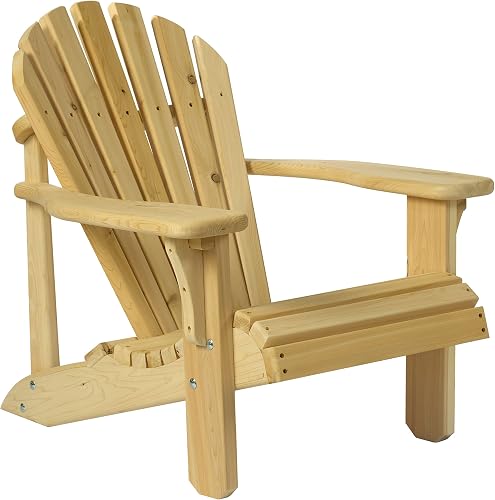
The Cedar Muskoka Chair suits someone who wants real wood and control over its finish. It uses Ontario northern white cedar, with the main surfaces and edges sanded ready for stain or another finish.
RNB Building Products describes the cedar as insect and weather resistant. That doesn't remove the need to choose a care routine that matches the appearance you want.
Pre-drilled screw and bolt holes, included hardware and illustrated instructions support the assembly process. The chair weighs 34 lb, so a wood frame doesn't make this a lightweight choice for frequent moves.
Choose it for a cottage-style seating area or a patio where wood is part of the design. It's also a sensible option if you enjoy finishing projects and want to choose the final look yourself.
Skip it if you want to assemble the chair and never think about a wood coating. Applying and renewing a finish takes time, space and suitable drying conditions.
Who should buy the Patioflare Wicker Muskoka Chair?
The Patioflare Wicker Muskoka Chair suits someone who wants a woven look with a cushion included. Its flat black hand-woven wicker covers a powder-coated steel frame.
The dark grey cushion is 2 in thick, and the wide arms suit relaxed sitting. This makes it worth considering for a lounge area where softer seating matters more than a traditional wood appearance.
Its seat height is 11.5 in, so skip it if low seats already make standing difficult. A cushion doesn't turn a low lounge chair into upright seating.
The maximum weight recommendation is 264 lb. Check that limit for everyone who will use the chair, especially when buying seating for guests.
Choose another option if you have nowhere dry to keep a cushion during wet weather. The frame, wicker and cushion each need care suited to their material.
How much room do these chairs need?
Plan for the whole chair plus access space, not just its seat. Reclined backs and broad arms can fill a patio faster than a front-view photo suggests.
The Cedar Muskoka Chair measures 40 in deep, 24 in wide and 33.5 in high. The Patioflare measures 32.68 in deep, 34.25 in wide and 35.83 in high.
Those shapes create different layout choices: the cedar chair needs more front-to-back space, while the Patioflare takes more width. Neither measurement alone tells you which fits a tight corner.
Mark each footprint on the ground with tape or a temporary outline. Open nearby doors fully and walk through the area while carrying something you normally take outside.
Leave space in front to bring your feet under you and stand. Also allow access beside the arms, especially if someone uses them for support when sitting down.
A side table should be reachable without a deep twist or a full lean forward. Don't assume an existing dining table will work well with a low, reclined chair.
Our guide to arranging furniture on a small patio can help you place chairs without blocking the route through the space.
Which chair suits reading, guests or easier standing?
Choose by the activity and the person using it most. A chair for a long reading session has different demands from one used for meals, quick visits or frequent trips indoors.
For reading, think about where your elbows and head will rest. Broad arms may support your forearms, but back height alone doesn't guarantee head support in your preferred position.
For conversation, angle chairs toward each other and keep a shared table within reach. Avoid spreading them so far apart that people must lean forward to talk.
For mixed guests, don't make low lounge seating the only option. Add an upright chair if some visitors prefer their feet under them or need an easier route to standing.
A higher seat isn't automatically the right fit either. Shorter users may struggle if their feet cannot reach the ground firmly.
Compare the new chair with a chair you already find easy to use. For more on seat height, arms and stable placement, see how to choose patio furniture for seniors.
If outdoor meals are the priority, start with our plain buying guide to porch and patio seating before committing to lounge chairs.
How should you assemble and set up the chair?
Build on a flat surface, follow the chair's instructions and check stability before use. A chair that rocks because of uneven ground needs a better location, not extra force on its fasteners.
Unpack the parts onto cardboard or a blanket to protect surfaces. Count the hardware before starting so you can resolve a missing piece without leaving the chair half built outdoors.
Use the tools and tightening order in the instructions. Don't force a screw through a misaligned hole or use extra power to pull parts into position.
For the cedar chair, decide on the finish before assembly. Follow the finish directions and chair instructions to work out which surfaces need coating and when.
Allow the full drying or curing time before sitting down or adding cushions. A surface that feels dry may still need more time before regular use.
Once assembled, place all feet on firm, level support and check the joints. Recheck hardware as directed, especially after moving the chair or taking it out of storage.
Lift furniture by a secure part of the frame rather than dragging it by an arm. Use help when the chair's size or the route makes carrying awkward.
How do you clean and protect each material?
Use care matched to the material, and remove dirt before it becomes packed into joints or woven surfaces. Avoid treating wood, HDPE, steel and cushions as though they share one cleaning method.
For POLYWOOD, use the brand's soap-and-water method with a soft-bristle brush. Start gently rather than reaching straight for harsh chemicals or aggressive tools.
For cedar, let the chosen finish guide cleaning and renewal. Clean and dry the surface before recoating, and don't cover damp or dirty wood with a fresh layer.
Inspect exposed wood for rough areas before they snag clothing. Address damage using methods suited to the wood and coating rather than sanding through a finish without a repair plan.
For the Patioflare, clear loose debris from the weave and follow the cushion's care directions. Don't assume the cushion cover can go in a washing machine.
Let cushions dry fully before storing them. Keep leaves and wet debris from collecting around the steel frame, and inspect the coating for damage.
Before winter, clean the chair and choose a storage spot where water won't pool around its feet. Our guide to leaving Adirondack chairs outside in winter covers seasonal care decisions.
What mistakes should you avoid before buying?
The biggest mistake is choosing by the name while ignoring fit. A familiar style can still be too low, too wide or too deep for your home.
- Measuring only seat width: Use the full outside dimensions, including the arms and reclined back.
- Buying a matching pair before checking access: Make sure 2 chairs, a table and the walking route fit together.
- Treating a cushion as a fit fix: Added padding changes how you sit and may reduce usable seat depth.
- Ignoring weight capacity: Confirm a suitable limit for the intended user rather than judging strength by appearance.
- Planning around folding or stacking: Don't count on either feature unless it's confirmed for the exact chair.
- Forgetting care supplies and storage: A finishable chair or loose cushion adds tasks beyond assembly.
Also check how the chair will reach its final spot. Gates, steps and tight turns matter even when the patio itself has enough room.
Which Adirondack or Muskoka chair should you choose?
Choose the POLYWOOD Classic Adirondack Chair AD4030 if avoiding wood refinishing is your priority. Confirm its dimensions, then make sure its lounge posture suits the main user.
Choose the Cedar Muskoka Chair if you want wood and welcome the choice of an outdoor finish. Make room for its deeper footprint and include finishing work in your setup plan.
Choose the Patioflare Wicker Muskoka Chair if you prefer woven seating with a cushion included. Rule it out if the low seat or weight limit doesn't suit the people using it.
Your Adirondack chair vs Muskoka chair decision should end with a chair that fits your body, your space and your care routine. If none of these fits those needs, compare more shapes in the best Adirondack chairs.
Frequently asked questions
Are Adirondack and Muskoka chairs the same?
Adirondack and Muskoka often name the same broad style of outdoor lounge chair; Muskoka is commonly used in Canada, but neither name sets a fixed seat height, back shape or material. Compare the exact chair's proportions and construction rather than expecting the label to guarantee a particular fit.
Which chair is more comfortable, Adirondack or Muskoka?
Neither name guarantees more comfort; seat height, recline and support matter more; a low seat can suit long lounging sessions but make standing harder. Before buying, read our guide to why Adirondack chairs can be hard to get out of and compare the chair with seating you already find comfortable.
Is a cedar Muskoka chair hard to maintain?
A cedar Muskoka chair needs a care plan that matches your preferred appearance and finish; this Cedar Muskoka Chair comes sanded and ready for stain or another finish. If you finish it, follow the coating's preparation, drying and renewal directions rather than applying a new coat on a fixed schedule.
Are plastic Adirondack chairs weatherproof?
Weather resistance depends on the specific chair, not the Adirondack name or the word plastic; Polywood describes this HDPE chair as weatherproof and suitable for hot sun and cold winters. Still, keep it clean, check its hardware and follow its care directions when planning outdoor use and seasonal storage.


