How to Choose Patio Furniture for Seniors
Choose patio furniture for seniors with a seat height that fits, reachable armrests and a stable base. Check how easily the person can sit and stand, then match movement, walking space and upkeep to their daily routine.
On this page (8 sections)
- What should you check when choosing patio furniture for seniors?
- Which patio chair features fit different needs?
- How can you make a patio chair easier to approach?
- How should you assemble and position outdoor seating?
- Can cushions make an outdoor chair easier to use?
- Which materials and care routines are practical?
- What buying mistakes should you avoid?
- How do you make the final choice of patio furniture for seniors?
Choose patio furniture for seniors with a suitable seat height, reachable arms and a stable base. The right chair lets the person sit, rest and rise without an awkward reach or a cramped approach.
Start with the person who will use it, rather than a matching patio set. A roomy rocker may suit someone who enjoys movement, while a firm, stationary chair may work better for someone who needs a predictable seat.
For a broader overview of seating styles and materials, see our plain patio furniture buying guide. If space is tight, our guide to arranging patio furniture on a small patio covers layout choices.
What should you check when choosing patio furniture for seniors?
Prioritize easy entry and exit, a suitable seat and a stable setup. Style, folding features and cup holders come after those needs.
Use this checklist before comparing chairs:
| Check | What to look for |
|---|---|
| Seat height | Feet can rest securely while the person sits and prepares to rise |
| Seat depth | The person can use the backrest without the front edge pressing behind the knees |
| Armrests | Hands reach the arms without raised shoulders or a sideways lean |
| Stability | The chair sits evenly on the intended surface |
| Movement | Rocking suits the person's ability to sit and stand |
| Approach | There is room to turn and position any mobility aid |
| Handling | Someone can assemble, clean and move the furniture |
| Upkeep | The care routine fits the household |
A familiar chair is a useful starting point. Measure one the person already finds comfortable, then compare its seat height, depth, width and arm position with outdoor options.
The seat heights for these 4 options are not specified, so confirm that measurement before ordering. Overall chair height measures to the top of the back and cannot tell you how high you will sit.
How should patio furniture for seniors fit the seated person?
The seat should support the person without making them perch at the edge or slide forward to reach the floor. Seat width matters, but depth and height often decide how easily someone can leave the chair.
For someone who normally sits with feet on the ground, check that both feet can rest securely. The front seat edge should leave room behind the knees rather than pressing into them.
An oversized chair can be too large for a smaller adult. Extra width may put the arms out of reach, and a deep seat may prevent the person from using the backrest comfortably.
Do armrests help an older adult stand up?
Armrests may help with sitting and rising when their position and construction suit the person. Wide arms provide resting space, but width alone does not show how useful they will be during a transfer.
Check that the person can reach both arms without leaning far to either side. Inspect the assembled joints for looseness before use, and follow any instructions about how the arms may be used.
If the person needs assistance standing, follow their clinician's or mobility specialist's advice. A patio chair should fit their established routine rather than require a new way to transfer.
Is a rocking chair suitable for seniors?
A rocker suits someone who enjoys movement and can manage getting into and out of a moving chair. Choose a stationary chair when rocking makes either task harder.
Keep runners on a firm, level surface and allow clearance through the full rocking motion. A design intended to reduce rollover risk does not make every placement safe.
Reclined seats need a separate fit check because they change how far the person must move forward to stand. Read why Adirondack chairs can be hard to get out of before choosing that shape for someone who struggles with low seating.
Which patio chair features fit different needs?
The 3 rockers below suit people who already prefer rocking, while the folding Adirondack pair suits reclined relaxation and seasonal storage. None is an automatic choice based on age, and each needs a seat-fit check.
SUUNYN: for a reader who wants a tall back and broad arms
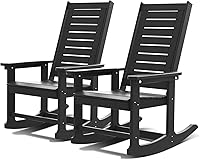
The SUUNYN Oversized HDPE Rocker suits someone who wants room to rest their back and forearms while reading or talking. Its 30 in backrest and 3.74 in wide armrests are useful features to compare with a familiar chair.
The chair has a 380 lb weight capacity and weighs 36.4 lb. That weight makes it worth planning a regular parking spot rather than expecting the seated person to carry it indoors after each use.
SUUNYN says its thickened runners reduce noise and smooth the rocking motion. The brand also describes a 4-point anti-rollover design, though the user still needs to manage the moving base.
Major components arrive 80% pre-assembled, and SUUNYN backs the chair with a 2-year warranty. Follow its instruction to finish assembly before the final screw tightening.
Skip it if a moving seat makes transfers difficult or the arms fall outside comfortable reach. A tall back cannot compensate for a seat that is too high, low or deep.
Ciokea: for someone who wants a measured rocker footprint
The Ciokea 380 lb Oversized Rocker suits a household that can reserve a defined space for regular rocking. Its footprint is about 35.4 in deep by 26.3 in wide, with a 19.6 in wide seat.
Tape that footprint on the patio before choosing a position. Leave extra room for movement, then check that the person can approach without passing behind another moving rocker.
The chair has a 380 lb capacity and weighs 38 lb. Ciokea uses HDPE and says the material resists rain, UV exposure and temperature changes.
It arrives 80% pre-assembled, includes stainless steel screws and carries a 2-year warranty. Arrange help with carrying and assembly if handling bulky furniture is difficult.
Skip it if the patio only fits the chair's resting footprint or the user needs a stationary base. Also confirm the arm configuration and reach, since these matter more for sitting and rising than the oversized description.
SERWALL: for a rocker user who needs more seat width
The SERWALL Single HDPE Rocking Chair suits someone who needs more space across the seat and can comfortably reach its arms. Its 21.1 in seat is the widest specified seat among these 3 rockers.
The chair has a 350 lb maximum weight recommendation and weighs 40.7 lb. It is the heaviest individual chair here, so decide who will move it before placing it where leaves or dirt collect.
SERWALL says its 4 supporting points and cross bars help distribute pressure during rocking. The HDPE chair requires partial assembly, and the brand backs it with a 3-year warranty.
Keep the screws loose enough to align the parts during assembly, then complete the final tightening as directed. Check that the finished chair sits evenly before use.
Skip it if extra seat width puts the arms too far apart or frequent moving is part of the routine. A smaller adult may fit a narrower chair better despite having less room across the seat.
GREENVINES: for a pair who enjoy reclining and need storage
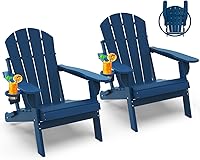
The GREENVINES HDPE Folding Adirondack Chairs suit 2 people who enjoy a reclined seat and folding storage. They are a better match for relaxed sitting than for someone whose main concern is easy rising.
Each chair measures 29.1 in wide by 33.5 in deep by 35 in high, weighs about 36 lb and has a 350 lb capacity. Folding reduces storage bulk, but it does not turn either chair into a light carry chair.
Rounded arms and a hidden cup holder in the right arm give drinks a place to sit. Keep the holder clear of the person's approach, and avoid leaning sideways to retrieve something that has fallen.
The chairs need partial assembly, and GREENVINES says their HDPE resists weather exposure. Keep hands clear of folding joints and follow the instructions when opening or closing them.
Skip this pair if the reclined posture makes standing harder or nobody can manage moving them. See our guide to outdoor rocking chairs if an upright-looking rocker is the preferred style, while still checking its actual seat fit.
How can you make a patio chair easier to approach?
Create a direct route from the door to the seat, with room to turn and stand. Plan that route around the person's usual cane, walker or assistance.
Check the space with the door fully open. A chair may fit neatly beside a doorway yet block the handle, threshold or turning area when someone enters.
Keep hoses, plant pots, loose rug edges and low decorations out of the route. Also check gaps between deck boards and uneven paving where chair feet or runners will rest.
Place a side table within an easy forward or sideways reach without crowding the approach. Avoid a layout that requires the person to lean across a rocker runner or squeeze between the table and chair.
Check the route at the time of day the patio will be used. Dim corners, glare and deep shadows can make changes in surface level harder to see.
For help fitting seats, tables and walking paths into a compact area, use our small patio arrangement guide.
How should you assemble and position outdoor seating?
Assemble the chair fully, tighten it as directed and check its footing before anyone sits down. Choose the final location early so the finished chair needs less carrying.
Lay out the hardware and identify the parts on a clear work surface. If assembly involves awkward lifting or working close to the ground, arrange help rather than building it in a cramped doorway.
Follow the chair's assembly sequence rather than tightening each joint immediately. Some frames need slight movement between parts so the remaining holes line up.
Once assembly is complete, check for loose joints, missing fasteners and uneven contact with the ground. Stop using a chair that rocks unexpectedly on a stationary base, has damaged parts or develops loose connections.
For a rocker, check its travel with no one seated first. Keep it clear of walls, railings, other chairs and places where a foot could get caught.
Do not add homemade blocks or restraints to change the rocking action. If movement does not suit the user, select a stationary chair designed for that use.
Can cushions make an outdoor chair easier to use?
A cushion can improve comfort, but it changes the seat's height, depth and firmness. Judge the complete chair-and-cushion combination rather than choosing the chair first and assuming any pad will work.
A thick, soft cushion may compress as the person sits and shift as they rise. It can also raise the seated position enough to make the armrests less useful.
Choose a cushion that fits the seat and stays in place using its intended attachments. Avoid stacking loose pads to solve a poor fit, since the layers can slide against each other.
Keep cushions dry and follow their care instructions. Remove them when needed rather than leaving a damp seat ready for the next use.
Check comfort over the length of a normal outdoor visit. A chair that suits a brief conversation may need a different seat shape or cushion for a long afternoon.
Which materials and care routines are practical?
HDPE is useful when you want less routine upkeep than wood, but the whole chair still needs cleaning and inspection. For these options, handling weight may matter as much as the material.
SUUNYN, Ciokea, SERWALL and GREENVINES all use HDPE. Their weather-resistance claims differ, so follow the instructions for the exact chair rather than assuming every outdoor plastic needs identical care.
For routine cleaning, start with the care method the brand recommends. Mild soap, water and a soft cloth or brush are common choices for HDPE; avoid harsh cleaners or pressure washing unless allowed.
Remove grit and leaves from slats, joints and the area beneath the chair. Check hardware at the intervals in the instructions and after moving or reopening furniture.
Outdoor furniture can become hot in direct sun. Check the seat and arms before sitting, and choose shade if the patio gets strong afternoon sun.
Plan winter care around who can move the chairs and where they will go. Our guide to storing a patio set for winter helps you plan storage, covers and access.
If you are also considering wood, compare the maintenance trade-offs in our HDPE vs wood Adirondack chair guide.
What buying mistakes should you avoid?
Avoid choosing by age labels, capacity or appearance alone. The most useful chair is the one that fits the person and works in the actual space.
- Using capacity as a comfort measure. A weight limit does not describe seat height, arm reach or ease of standing.
- Assuming oversized means easier. A wide, deep chair may leave a smaller person without reachable arms or back support.
- Measuring only the empty patio. Include doors, tables, mobility aids and the movement of rocking chairs.
- Choosing folding furniture for lightness. Folding changes shape; check the weight separately.
- Buying a matching set before checking fit. Two people may need different seat heights or chair styles.
- Adding accessories to correct the wrong chair. Loose cushions, footstools and nearby tables can create more obstacles without fixing seat access.
Think through the daily routine before ordering. Someone must be able to uncover the furniture, wipe it down and return any cushions without blocking the user's route.
If possible, arrange a supported trial of the chair or a closely matched shape. Pay attention to sitting and standing as well as comfort once seated.
How do you make the final choice of patio furniture for seniors?
Choose patio furniture for seniors by eliminating poor fits first, then comparing comfort features. Reject a chair if its movement, seat position or approach makes normal use difficult.
Choose SUUNYN for broad arm-resting space and a tall back, Ciokea when its measured seat and footprint fit your planned rocker area, or SERWALL when extra seat width helps without putting the arms out of reach.
Choose GREENVINES for 2 people who already enjoy reclined Adirondack seating and have help available for folding and moving. Choose a stationary chair outside this group if rocking or reclining makes rising harder.
Before ordering, settle 3 things: the seat fit, the clear route and who will handle upkeep. For other chair styles that may fit those needs, use our porch and patio seating guide.
Frequently asked questions
What kind of patio chair is easiest for an older adult to get out of?
Start with a firm, stationary chair whose seat height and armrests fit the person; a low or deeply reclined seat can make rising harder, while an overly high seat can leave feet unsupported. Compare the fit with a familiar chair and arrange a supported trial when needed.
Are rocking chairs a good choice for seniors?
Rocking chairs suit people who enjoy the motion and can manage entering and leaving a moving seat; they are a poor choice when movement makes transfers harder. Allow clearance for the runners on a firm, level surface, and keep the chair away from steps and walking routes.
Should patio furniture for seniors have arms?
Reachable, solid armrests are useful for resting hands and may help with sitting and rising; their position matters more than width alone, and the chair must suit that use. Arms do not replace a mobility aid or support recommended for someone who needs help standing.
How much space should I leave around an outdoor chair?
Leave enough space for the person to approach, turn and stand using their usual mobility aid or assistance; there is no single clearance that fits every household. Check the route with doors open and the furniture in place, including a rocker's full movement and any side table.
Is HDPE patio furniture easy to maintain?
HDPE generally needs less upkeep than wood because it does not need the same refinishing routine; it still needs cleaning, clear drainage gaps and regular hardware checks under the chair's care instructions. Consider handling too: a weather-resistant or folding chair can still be too heavy for one person to move.