Porch Swing With Stand or Hanging Swing: How to Choose
Choose a porch swing with stand if you lack a suitable beam or want a freestanding setup. Choose a hanging swing if you have a verified support and need to save floor space, then check clearance and the limits of every supporting part.
On this page (12 sections)
- Is a porch swing with a stand or a hanging swing right for you?
- What should you check before buying either setup?
- Which complete swing-and-stand set suits shade and lounging?
- Which separate stand suits an existing wooden swing?
- What should you check before hanging a wooden swing?
- How much clearance does either type need?
- When does the higher-capacity VINGLI stand make sense?
- How do weight limits apply to a complete swing setup?
- How should you assemble and check the swing?
- What care does a swing and stand need outdoors?
- Which buying mistakes cause the most trouble?
- Which porch swing with stand or hanging setup should you choose?
A porch swing with stand is the better choice when you lack a suitable overhead beam; a hanging swing suits a porch with verified support and limited floor space. Choose the support system first, then the seat style and extras.
A stand avoids attaching the swing to your home, but its legs use floor space beyond the bench. A hanging swing keeps that space open, though the beam and attachment hardware must carry the moving load.
If you are still comparing seat sizes and styles, start with our plain guide to porch and patio seating. For a swing-specific overview, see our porch swing guide.
Is a porch swing with a stand or a hanging swing right for you?
Choose a stand for placement freedom and a hanging swing for a clearer floor area. Both still need enough room for the seat to move and people to pass.
| Your situation | Better starting point | Main buying check |
|---|---|---|
| No suitable overhead beam | Swing with a stand | Level surface and full frame footprint |
| Verified support above a narrow porch | Hanging swing | Attachment method and movement clearance |
| You want shade and a reclining backrest | Complete canopy swing set | Canopy height and space when reclined |
| You already own a hanging bench | Separate compatible stand | Hanging points, chain length and load limits |
| You may change the seating layout | Freestanding setup | Weight, disassembly and the next location |
| The proposed spot is beside a busy doorway | Reconsider the location first | Door travel and an open walking route |
A stand makes sense for an open patio or yard seating area where a porch beam is unavailable. It also lets you choose a location around the view or conversation area instead of the position of an existing support.
A hanging seat suits a covered porch when the structure is suitable and frame legs would crowd the floor. That advantage disappears if the seat's movement blocks the only route to the door.
For renters, a freestanding arrangement may avoid building attachments, but check property rules before assembling it. Also plan how you would remove the frame when moving.
What should you check before buying either setup?
Check space, support and usable seating before comparing finishes or extras. A swing that fits on paper can still leave too little room for sitting down or walking past.
Start by marking the proposed footprint with painter's tape or another temporary marker. Open nearby doors fully and walk the routes you use with groceries, a watering can or a serving tray.
Measure overhead space as well as floor space. A roof edge, gutter, low branch or light fixture can interfere with a stand's top beam or canopy.
Seat count is only a starting point for comfort. Compare the usable seat width with the people who will share it, and account for cushions or pillows that take up sitting room.
Think about getting on and off, too. A deep, soft seat or lounge position may appeal for resting but be less convenient for someone who prefers an upright seat and firm footing.
Measuring for a porch swing with stand
Measure the assembled frame, then add the clearances required by its instructions. The bench width alone cannot tell you whether the whole setup fits.
Check the frame at its widest points, including feet, braces and canopy edges. Keep those parts out of walking routes where they could become trip hazards.
If the backrest reclines, map the space in both sitting and flat positions. Leave access to any locks or controls so you can change positions without squeezing against a wall.
On a small porch, draw the swing's movement area before placing side tables. Our guide to arranging furniture on a small patio can help you keep a usable route through the seating area.
Which complete swing-and-stand set suits shade and lounging?
The Aoxun Porch Swing with Stand and Canopy suits buyers who want a seat, support frame and shade in one setup. Choose it for a patio lounge area where the canopy and reclining backrest will get regular use.
Its powder-coated steel frame measures 76 in wide, 47 in deep and 68 in high. Those are the overall dimensions, so still allow the movement and access space required by its instructions.
The canopy adjusts through 60 degrees, which helps you change its angle as the sun moves. It won't shade every side of the seat at every time of day, so consider where afternoon sun enters your patio.
The backrest converts to a flat bed by releasing locks on both sides. High-density sponge cushions, 2 cylindrical pillows and cup holders on both sides make this the most lounge-focused option here.
Skip it if you want a bare wooden bench, have nowhere to store soft furnishings or rarely plan to recline. At 88 lb, it also needs more planning to relocate than a small outdoor chair.
Aoxun gives conflicting capacity figures of 750 lb and 800 lb. Confirm the applicable limit with Aoxun before buying if the expected load affects your decision.
Which separate stand suits an existing wooden swing?
The VINGLI 6.9 ft Frame for 5 ft Swing suits buyers who already have a compatible bench and want a brown wooden support. It is a stand only, so it won't solve the seating part of the purchase.
This pine frame measures 84 in wide, 54 in deep and 68 in high, with a 660 lb capacity. Its A-frame sides and lower connecting board form the support structure, while caps cover exposed screw ends.
Choose it when its footprint works and your bench can connect as intended. The lower board is also worth noticing during placement, especially if people might try to walk through the frame.
Skip it when your planned load leaves too little allowance under the frame's limit or when the hanging points don't match your bench. A higher-capacity seat cannot raise the stand's limit.
Before pairing separate parts, check the distance between hanging points and the chain arrangement. A shared “5 ft” description is not enough to confirm a match.
What should you check before hanging a wooden swing?
A hanging swing needs a verified structural support and suitable attachment hardware before the bench goes up. The swing's own capacity cannot tell you what a porch beam or fastener can hold.
Have the support checked before ordering hardware. Decorative trim, a ceiling panel or an exposed piece of wood may conceal how the actual structure is built and connected.
The VINGLI 5 ft Wooden Porch Swing, 880 lb suits buyers who want a cedar bench for a verified overhead support or compatible separate frame. Its painted brown finish fits a traditional porch setup without an attached canopy.
The bench measures 60.6 in wide, 24.4 in deep and 18.9 in high, with a 15.4 in seat depth. VINGLI describes seating for up to 3 people, but use the seat dimensions to judge your group's comfort.
Its curved front edge and adjustable chains let you consider knee clearance and seat angle during setup. Don't assume the same chain position will feel right for every user.
The box includes 2 chains, instructions and assembly hardware; the hanging kit is separate. Skip this bench if you want a complete freestanding set without choosing a support and its connections.
VINGLI gives chain guidance for porches up to 8 ft high, with adjustment for lower supports or frames. Read how to hang a porch swing and what the beam must hold before planning attachment points or extra hardware.
How much clearance does either type need?
Keep the entire movement path clear, with room to sit down and stand up safely. Use the clearance requirements for your exact swing and support rather than a single gap suggested for every model.
Check in front of and behind the seat, then at the sides where chains and armrests move. Nearby railings, planters and tables should stay outside that path.
A frame fitting between 2 walls doesn't prove the bench can move freely inside that space. Likewise, enough room for the hanging seat doesn't guarantee a clear route around it.
Watch the door swing as well as the porch swing. A door should open fully without meeting the seat, frame or someone getting off the bench.
Our guide to porch swing width and depth explains the difference between seat size and the space you need around it. Use those measurements to compare layouts before bringing furniture home.
When does the higher-capacity VINGLI stand make sense?
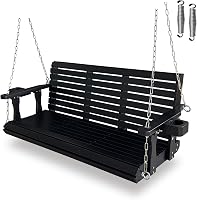
The VINGLI 6.7 ft A-Frame Swing Stand suits buyers seeking a black wooden frame with a higher stated load limit. It is worth considering when the lower-capacity frame leaves too little allowance, provided all other parts are compatible.
This pine stand has a 1,000 lb capacity and measures 80 in wide, 56 in deep and 73 in high. It has a curved top, triangular upper supports and pre-drilled components for assembly.
Compared with the brown frame, it is narrower but deeper and taller. Choose by the shape of your available space rather than assuming the shorter model name means a smaller footprint.
At 70.4 lb, it is also a more substantial item to handle during assembly and relocation. Plan a route to the final spot and arrange help for lifting the larger pieces.
Skip it if you expect the stand to increase the bench's limit. An 880 lb swing remains limited by its own requirements even when attached to a higher-capacity frame.
How do weight limits apply to a complete swing setup?
Treat the swing, stand, chains and connectors as one support system. Every part must be suitable, and a large capacity number on one component cannot make another component stronger.
For a separate stand, confirm whether its limit includes the hanging bench's weight as well as the occupants. That distinction matters when calculating how much load the frame will carry.
Do not add the bench and stand capacities together. Also avoid planning routine use right at a limit without first understanding how the manufacturer defines it.
Swinging creates forces beyond simply placing weight on a chair. Use gentle motion and follow the intended use rather than treating an adult porch swing as playground equipment.
If a capacity figure is unclear or conflicts with another figure, resolve it before buying. Choosing the larger number because it suits your plans leaves the most important support question unanswered.
How should you assemble and check the swing?
Assemble the setup in its intended location, following the instructions for both the seat and support. Plan for another adult to help hold larger parts and keep children clear of the work area.
- Prepare the base. Choose a level, firm surface where every frame foot can sit properly without rocking or sinking.
- Sort the parts. Match hardware to the instructions before joining the frame or bench.
- Align before tightening. Follow the stated assembly order so early tightening doesn't pull later holes out of line.
- Connect the seat correctly. Use the intended hanging points and compatible connectors without improvised extensions.
- Check the finished setup. Confirm locks, fasteners, seat alignment and movement clearance before use.
Do not fix an uneven base with loose scraps placed under individual feet. Correct the location or use a manufacturer-approved method suited to the surface.
For a reclining model, change positions while the seat is unoccupied and follow the locking steps. Check that both sides are secure before anyone sits or lies down.
After assembly, move the empty seat gently through its intended path and inspect for contact or shifting. Recheck connections after initial use as directed by the manufacturer.
What care does a swing and stand need outdoors?
Keep connections sound and surfaces dry between wet periods to reduce avoidable wear. Weather-resistant finishes and fabrics still need routine care.
Wipe away dirt with methods suited to the material, and let surfaces dry. Keep leaves and debris from collecting around wooden joints, feet or places where water can sit.
Inspect wood for cracks, rough areas and worn finish. Follow the manufacturer's care instructions for any touch-up or refinishing rather than applying an unrelated coating.
On metal frames, check for damaged coating and corrosion around joints or fasteners. Inspect chains, hooks and other load-bearing parts for wear or distortion, and replace damaged parts before use.
Store cushions and pillows dry when they won't be used for a while. Don't leave damp soft furnishings sealed inside a cover, where moisture has no easy way to escape.
A canopy needs attention during windy weather because it catches wind. Follow the model's instructions for securing, folding or removing it, and plan storage before the storm season arrives.
For longer periods out of use, our guide to storing patio furniture for winter covers cleaning and storage planning. Choose a cover that suits the assembled shape and allows the ventilation its materials need.
Which buying mistakes cause the most trouble?
The biggest mistakes are measuring only the bench and assuming separate parts fit. Prevent both by checking the complete assembled setup before ordering.
- Buying a frame instead of a complete set: Both VINGLI stands need a separate swing, while the wooden VINGLI bench needs its own suitable support.
- Confusing chains with a hanging kit: Included chains don't automatically include the hardware needed to attach them to a building.
- Choosing by seat count alone: Check actual sitting room, depth and access for the people who will use it.
- Treating a canopy as a roof: Adjustable shade isn't a reason to leave cushions exposed through prolonged wet weather.
- Planning to move the swing every day: Frame weight and size can make frequent relocation awkward.
- Blocking a walkway: A seat that moves through a busy route is a poor fit even if the stationary footprint clears it.
If movement clearance defeats both layouts, consider a different seating type. Our porch swing vs glider guide compares how each uses space.
Which porch swing with stand or hanging setup should you choose?
Choose the Aoxun complete set for shade and reclining, the VINGLI bench for a traditional hanging seat, or a separate VINGLI frame for a compatible bench you already have. Your final choice should pass the space and support checks before extra features decide it.
For the separate frames, choose the brown model when its footprint and capacity suit the job. Consider the black model when its higher frame limit helps, while keeping every other component within its own requirements.
A porch swing with stand earns its floor space when it gives you a usable seat where no suitable beam exists. A hanging swing is the better fit when verified overhead support lets you keep the porch floor more open.
Before ordering, write down the full footprint, required clearance, included parts and confirmed load limits. Then compare the porch swings and separate frames in our guide against that short checklist.
Frequently asked questions
Is a porch swing with a stand safer than a hanging swing?
Neither setup is automatically safer; a stand needs a level, stable base and compatible parts, while a hanging swing needs a verified support and suitable hardware. Follow the installation instructions, confirm how each component's weight limit applies, and keep the swing's movement area clear of people and furniture.
Can I use a hanging porch swing without a porch roof?
Yes, a hanging swing can use another suitable overhead structure, but that structure and its connections must be assessed for a moving load. Have a qualified installer check a pergola or other proposed support before installation, or choose a compatible freestanding frame when suitable overhead support is unavailable.
How much room does a porch swing with stand need?
A porch swing with stand needs room for its assembled frame, the movement clearance required by its instructions and access to the seat. Measure the outside width, depth and height, then check nearby doors and walking routes, including extra space needed for an adjustable canopy or reclining backrest.
Can I hang a swing from any porch beam?
No, a beam's appearance alone cannot confirm that it can carry a swing and its moving load; the beam, its connections and the attachment hardware all need checking before installation. Have a qualified installer assess the structure rather than attaching a swing to decorative trim or an unverified support.