Can You Leave a Wooden Rocking Chair Outside?
You can put a wooden rocking chair outdoors if it's made for outdoor use. Choose a sheltered spot, keep it dry between showers, and follow its finish-care and seasonal-storage instructions.
On this page (11 sections)
- Can you put a wooden rocking chair outdoors every day?
- What weather is hardest on a wooden rocker?
- Does wood type or finish change what you should buy?
- Which wooden rocking chair suits your porch?
- How much space does an outdoor wooden rocker need?
- How should you set up a wooden rocking chair outside?
- How do you care for a wooden rocking chair outdoors after rain?
- Should you cover a wooden rocking chair outdoors?
- Can you leave a wooden rocking chair outside in winter?
- What mistakes shorten a wooden rocker's outdoor life?
- Should you put a wooden rocking chair outdoors?
You can put a wooden rocking chair outdoors if it's made for outdoor use, but shelter and regular care still matter. A covered porch is easier on wood than an open deck where rain repeatedly soaks the seat and runners.
Before buying, decide where the chair will sit and where it will go during severe weather. Those 2 choices matter more than a wood-colored finish or a promise of outdoor durability.
Can you put a wooden rocking chair outdoors every day?
Yes, an outdoor wooden rocker can stay outside for daily use in a sheltered, ventilated spot. A roof limits direct rain and sun, though wind-driven rain can still reach the chair.
Wood absorbs and releases moisture as conditions change. Repeated soaking and drying can strain joints, wear the finish, and contribute to cracking or warping.
An indoor rocker shouldn't become permanent patio furniture just because you add a cover. Its coating, exposed joints, and hardware may not suit repeated outdoor exposure.
Check how your chosen spot behaves after rain: water under the runners or a seat that stays damp means you need a drier location.
What weather is hardest on a wooden rocker?
Repeated rain, slow drying, and strong sun are the main everyday concerns. Prolonged snow, freezing rain, and storms make dry storage especially useful.
Sun can fade and wear a finish, while water can collect around joints and screw holes. Shade helps with sun exposure, but a shaded corner that stays wet isn't a good storage spot.
Clear fallen leaves from the seat and around the runners. Damp debris holds moisture against the wood even after the rest of the patio looks dry.
Does wood type or finish change what you should buy?
Yes, choose by the actual wood, protective finish, and care instructions together. A familiar wood name in a color description doesn't identify the frame material.
Acacia is a hardwood used in outdoor seating, but it still needs care suited to its coating. Neither hardwood construction nor a protective finish makes a chair suitable for every climate without maintenance.
Paint and clear finishes also need different upkeep. Don't apply outdoor oil over an existing coating unless the chair's care instructions allow it.
If you want fewer wood-care tasks, our HDPE vs wood Adirondack chair guide explains material tradeoffs that also help when choosing porch seating.
Which wooden rocking chair suits your porch?
Flamaker suits a shared porch, Shine Company suits a single-chair setup with simpler assembly, and VINGLI suits buyers who want wide armrests. Each needs a sheltered placement and care plan, with different details worth checking before buying.
Flamaker: for a shared covered porch
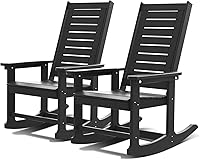
Choose Flamaker when you want 2 matching seats and have room to store both. Each acacia chair has a 300 lb capacity, a contoured fan-shaped seat, and a taller backrest.
The dimensions are 34 inches deep, 27.2 inches wide, and 44 inches high per chair. Mark out both footprints before ordering, then allow extra space behind them for rocking and between them for access.
Flamaker recommends indoor storage during extreme weather and avoiding contact with sharp objects. Skip this pair if you only need 1 chair or can't make room for both in dry storage.
Shine Company: for a single porch seat
Choose the Vermont rocker if you want 1 chair with part of the assembly already done. It has reinforced joints, rust-resistant hardware, a high backrest, and supportive armrests.
Despite “Oak” in its name, its frame is solid acacia hardwood. Shine Company says kiln-drying helps limit cracking, splitting, and warping, while a wood sealant adds protection beneath its painted finish.
It measures 34 inches deep, 27 inches wide, and 44.5 inches high, and weighs 20 lb. Soap-and-water cleaning is allowed, which gives you a clear starting point for routine care.
Skip it if you need a confirmed load limit before ordering; confirm that limit with Shine Company first. Its protective finish also doesn't remove the need for shelter and seasonal checks.
VINGLI: for wide-armrest seating
Choose VINGLI if your priorities are a high back and wide, rounded armrests. It comes with assembly hardware and instructions, plus plugs for the screw holes.
VINGLI says those plugs help shield the screws from rust. Fit them as directed, but keep checking exposed joints and hardware during routine care.
“Teak” identifies its color and finish here; the wood species isn't confirmed. Skip it if buying genuine teak is central to your choice.
Its dimension figures conflict, so confirm the assembled footprint before choosing it for a narrow balcony or doorway. Don't rely on its compact appearance when planning rocking clearance.
How much space does an outdoor wooden rocker need?
Allow room for the full rocking motion and a clear walking route, beyond the chair's stationary footprint. There isn't one clearance figure that fits every runner shape or porch.
Measure doors, gates, and the route to winter storage before buying. A chair that fits its summer corner may still be awkward to move through a tight turn.
Keep the runners away from steps, deck edges, and door swings. Plan space for your feet and for getting in and out without reaching across a table.
For layout help, see how to arrange patio furniture on a small patio. Our porch and patio seating guide helps you decide whether a rocker suits the space better than other seating.
How should you set up a wooden rocking chair outside?
Assemble it as directed and place it on a firm, level surface before sitting down. Uneven paving, soft soil, and loose gravel can interrupt the runners' movement.
Follow the fastening sequence rather than fully tightening the first joint you connect. Keep all required washers and fittings in place, and don't substitute hardware without approval from the chair's manufacturer.
Check that both runners rest evenly and that the frame doesn't wobble sideways. Stop using the chair if a joint loosens, a runner cracks, or the frame shifts.
Keep fingers, children's hands, and pets clear of the runners. A deep rug or curled mat can catch beneath them, so check the entire rocking path.
How do you care for a wooden rocking chair outdoors after rain?
Remove pooled water and let the chair dry with air around it. Pay attention to the seat, armrests, runner ends, and joints where moisture can linger.
Use a soft cloth rather than scraping dirt off with a sharp tool. Clean with products suitable for the chair's finish, and avoid pressure washing unless its instructions specifically permit it.
Inspect worn patches before applying any treatment. If the finish is peeling or wood feels rough, identify the existing coating and the right repair method before sanding or recoating.
Don't guess at a yearly oiling schedule. The right treatment and timing depend on the finish, exposure, and signs of wear.
Should you cover a wooden rocking chair outdoors?
Yes, a breathable, well-fitted cover can reduce direct exposure while the chair is idle. Put it on only after the wood has dried.
Choose a cover that accommodates the whole chair without pulling tightly across its arms or back. Secure it as directed and preserve any ventilation openings.
Check underneath after wet spells, especially in a humid or shaded location. Persistent dampness calls for better airflow or a drier spot, rather than another cover.
Can you leave a wooden rocking chair outside in winter?
Dry indoor storage is the better choice for prolonged snow, freezing rain, and severe weather. A roofed porch offers shelter, but it may still collect drifting snow or wind-driven moisture.
Clean and dry the chair before storage, then keep it away from damp floors and leaks. Don't stack heavy boxes on the seat or hang heavy items from the back.
Our guide to leaving Adirondack chairs outside in winter covers seasonal exposure for other wood seating. Use how to store a patio set for winter when planning space for several pieces.
What mistakes shorten a wooden rocker's outdoor life?
The biggest mistakes are trapping moisture, ignoring loose joints, and using the wrong finish treatment. Small checks are easier than repairing wood after damage spreads.
- Don't leave runners in wet soil or puddles.
- Don't cover damp wood and forget about it.
- Don't treat a teak color as proof of teak construction.
- Don't apply oil, paint, or sealant without checking compatibility.
- Don't keep rocking when joints loosen or wood cracks.
A roof helps, but inspect the chair after storms and during seasonal moves. Repair concerns before returning it to regular use.
Should you put a wooden rocking chair outdoors?
Put a wooden rocking chair outdoors when you have shelter, rocking clearance, and a workable storage plan. Choose Flamaker for matching seats, Shine Company for a single partly assembled rocker, or VINGLI for wide armrests after confirming its size.
If your chair must stay on an exposed deck through every season, start with the care demands you can manage. Compare alternatives in our best outdoor rocking chairs guide before committing to wood.
Frequently asked questions
Can a wooden rocking chair stay outside in the rain?
An outdoor wooden rocking chair can get wet, but repeated soaking and slow drying increase wear on its finish and joints. Keep it under a roof when possible, wipe away pooled water after rain, and leave space for air to circulate before putting on a cover.
Should I cover a wooden rocking chair outdoors?
Use a breathable, well-fitted cover when the chair is dry and out of use; secure it according to its instructions, and check underneath after wet weather for trapped moisture. A cover helps reduce exposure, but it doesn't replace a dry storage plan during severe weather.
Can I leave a wooden rocker outside in winter?
Dry indoor storage is the better choice during long periods of snow, freezing rain, or severe weather. Clean and fully dry the chair before moving it, and keep it away from leaks and damp floors; follow the chair's care instructions for any finish treatment before storage.
How do I protect a wooden rocking chair outside?
Protect an outdoor wooden rocker by placing it on a firm, level surface under a roof, clearing away wet leaves, and drying pooled water. Inspect joints and finish as conditions change, use only suitable cleaning products, and move it into dry storage when its care instructions recommend it.