How to Stop a Rocking Chair From Rocking
To stop a rocking chair from rocking, tighten every loose screw and bolt first, then set it on a flat, hard surface so both runners touch evenly. If it still creeps, add rubber pads or a small stop under the runners to hold it in place.
On this page (10 sections)
- Why does a rocking chair rock on its own?
- How do you tighten a rocking chair to stop the rocking?
- What surface stops a rocking chair from moving?
- How do you add grip to stop the runners from creeping?
- What can you use to lock a rocking chair in place?
- When should you replace the chair instead of fixing it?
- Do you need a special mat under a rocking chair?
- How do you keep a rocking chair still on a windy porch?
- Can a swivel chair replace a rocking chair?
- Which fix should you try first?
To stop a rocking chair from rocking, tighten every loose screw and bolt first, then set it on a flat, hard surface so both runners touch evenly. If it still creeps, add rubber pads or a small stop under the runners to hold it in place.
Most unwanted rocking comes from loose hardware or a surface that lets the runners sink and shift. Fix those two things first, and the chair usually stays put.
Why does a rocking chair rock on its own?
A rocking chair rocks on its own when its joints are loose or its runners don't sit level. Either problem lets the chair tip without a person in it.
Loose screws and bolts let the frame flex, so the runners move against the floor. A soft lawn or thick rug does the same, because each runner sinks to a different depth.
A chair on a slope rocks even more, since gravity pulls it downhill. Before you change anything, tip the chair and look for gaps at the joints and wear at the runner ends.
That quick look tells you whether you need a screwdriver or a pad.
How do you tighten a rocking chair to stop the rocking?
Snug every screw and bolt until it stops turning freely, then stop. Go around the chair in order so you don't miss a joint.
Start with the arms and the seat frame, where the most movement happens. Then check the back slats and the runner mounts, since a loose runner mount is a main cause of a chair that rocks while it sits empty.
Don't overtighten. HDPE slats and wooden parts can split or strip when a screw is forced past its stop.
If a screw spins without gripping, the hole may be stripped and needs a longer screw or a small wood filler. Test the chair after each round, and repeat the tightening before you try anything else.
What surface stops a rocking chair from moving?
A flat, hard surface stops the most unwanted rocking. Both runners need to touch the ground at the same time and stay there.
Move the chair off soft grass, loose gravel and thick rugs. A wooden deck, a concrete patio or a flat tile floor gives the runners a steady base.
If the chair still tips, slide a thin shim under the low runner end. Also check the runners for a twist, because a warped runner rocks no matter how flat the ground is.
Lay a straight edge along each runner to see if it sits flush.
Where should an outdoor rocking chair go?
Put an outdoor rocking chair on a level patio or deck, not on a slope or soft ground. Shade or a porch overhang keeps the surface dry and stops the runners from sinking.
Our guide to outdoor rocking chairs covers the frame types and surfaces that suit each one. A poly chair with wide runners sits steadier than a thin wooden rocker on a windy deck.
How do you add grip to stop the runners from creeping?
Rubber pads under each runner end add grip and stop the chair from sliding. They also raise the runners off a rough surface so the chair doesn't catch and tip.
Cut a pad to fit each runner end and press it on. Furniture pads with adhesive backing are easy to place, and a strip of non-slip mat under the runners works too.
A small door stop or a furniture foot set in front of a runner stops the chair from creeping forward. Use one at each end if the chair moves both ways.
Avoid placing a pad in the middle of a runner. The chair needs the runner to rock freely when someone sits down, so keep pads at the ends and under the tips.
What can you use to lock a rocking chair in place?
A wedge, a stop block or a strap locks a rocking chair so it doesn't move. This suits chairs you want to keep still on a porch or deck.
Slide a rubber wedge under one runner end to hold the chair level. For a more permanent fix, flip the chair and attach small blocks or rubber feet under each runner tip.
A strap around the back and seat holds a light chair in a gust. Check the seat sits level after any change, because a chair that sits higher on one side will still tip.
Which chairs are already steady?
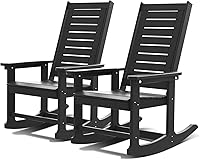
A wide-seat HDPE chair with four support points stays put better than a narrow wooden rocker. The SERWALL Single HDPE Rocking Chair uses four-supporting points with cross bars to spread the load to each point.
SERWALL says the runners are set to a calculated rocking arc that helps the chair stay stable. That arc also means the chair still rocks when you want it to.
If you own this model and it creeps, tighten the runner mounts and check the surface first.
When should you replace the chair instead of fixing it?
Replace the chair when a runner is cracked, the frame is warped or a joint won't hold a screw. A repair only works if the frame is sound.
Check for splits along the runners and loose joints that reopen after tightening. A warped runner can't be fixed with pads, and a chair with a cracked runner can tip under weight, so stop using it.
If the frame is fine and only the surface or hardware is the problem, fix it. Our review of the POLYWOOD Presidential rocking chair covers how a solid poly frame holds its shape over time.
Do you need a special mat under a rocking chair?
A non-slip mat helps on smooth decks and tile, where bare runners slide. It also protects the floor from wear at the runner tips.
Place a mat wide enough for both runners and long enough to cover their travel. A thin mat works better than a thick one, since a thick mat lets the runners sink unevenly.
Avoid thick rugs and soft foam under a chair you want to keep still. For a stable base, a thin rubber-backed mat is the better pick.
How do you keep a rocking chair still on a windy porch?
Block the runners and anchor the chair against the wind. Wind is a common reason an empty chair rocks and creeps across a porch.
Turn the chair side-on to the wind so the back doesn't catch gusts. Set a wedge under each runner end and add a strap around the seat and back for light chairs.
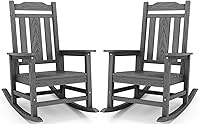
A heavier HDPE frame helps too. The SUUNYN Oversized HDPE Rocker has a heavy-duty frame and a 4-point anti-rollover design, and its thickened runners are built to reduce noise and glide smoothly.
For a direct comparison of two similar oversized rockers, see GREENVINES vs SERWALL and POLYWOOD vs SERWALL. Both guides cover frame weight and runner design, which matter when you want a chair that stays put.
Can a swivel chair replace a rocking chair?
Yes, if you want a seat that turns instead of rocks. A swivel chair doesn't rock at all, so there's nothing to stop when the chair sits empty.
The ComfCove Outdoor Swivel Patio Chairs Set pairs two swivel chairs with a side table. The chairs turn 360 degrees on a ball-bearing base and sit on a fixed frame, so they stay level on a flat patio.
The set suits a porch where you want seating that won't creep in the wind.
The chairs need a flat, hard surface for the swivel to work smoothly. That's the same rule that keeps a rocker still, so check your patio before you swap.
Which fix should you try first?
For anyone asking how to stop rocking chair from rocking, start with the hardware and the surface, then add grip. Tighten the joints, move the chair to a flat hard surface, and test it before you buy pads.
If it still creeps, add rubber pads or a stop under the runners. Replace the chair only when a runner is cracked or a joint won't hold.
Pick a wide-seat HDPE model like the SERWALL if you're buying new and want a steady frame from the start, or a swivel set like the ComfCove if you'd rather not rock at all.
Frequently asked questions
Why does my rocking chair keep moving when I'm not sitting in it?
Loose joints and an uneven floor are the usual causes. Tighten the hardware, put the chair on a flat hard surface, and add rubber pads under the runners so the chair stays put.
Can I stop a rocking chair from rocking without tools?
Yes. Set the chair on a flat surface and slide a rubber pad, wedge or folded mat under the runners.
A small door stop or furniture foot in front of a runner also stops it from creeping.
Will tightening the screws damage my rocking chair?
Only if you overtighten them. Snug each screw and bolt until it stops turning freely, then stop.
Overtightening can split HDPE slats or strip the threads.
Does a rocking chair need a level surface to stop rocking?
It helps a lot. Both runners should touch the ground at the same time.
A soft lawn or thick rug lets the runners sink and rock on their own, so move the chair to a flat hard surface.
Can I lock a rocking chair so it never rocks again?
You can add stops, pads or a wedge to hold the runners in place. A more permanent fix is to flip the chair and attach small blocks or rubber feet under each runner end, then check the seat still sits level.